|
 Up
Up
 WRIGHT
TIMELINE WRIGHT
TIMELINE
1890 TO 1899 
(You
are here.)
 Down
Down

  Need
to Need
to
find your
bearings?
Try
these
navigation aids:
If
this is your first
visit, please stop by:
Something
to share?
Please:
|
|
Available in Française, Español, Português, Deutsch, Россию,
中文,
日本, and others.
 o
invention, no scientific discovery, no work of art, no human
endeavor happens in an historical vacuum. There are always other
factors -- cultural, political, personal -- that influence the
outcome of a single event. So it was with the invention of the
airplane. When Wilbur and Orville were children, the abacus was the most
advanced mathematical aid, influenza was an often-fatal disease, and
the cannon was the most feared weapon of war. By the time Orville
died, the first computers were just being built, antibiotics had
begun to wipe out disease, and the atomic bomb made war
unthinkable. Many of these advances influenced the development of
the airplane -- and the airplane, in turn, influenced further
advances. o
invention, no scientific discovery, no work of art, no human
endeavor happens in an historical vacuum. There are always other
factors -- cultural, political, personal -- that influence the
outcome of a single event. So it was with the invention of the
airplane. When Wilbur and Orville were children, the abacus was the most
advanced mathematical aid, influenza was an often-fatal disease, and
the cannon was the most feared weapon of war. By the time Orville
died, the first computers were just being built, antibiotics had
begun to wipe out disease, and the atomic bomb made war
unthinkable. Many of these advances influenced the development of
the airplane -- and the airplane, in turn, influenced further
advances.
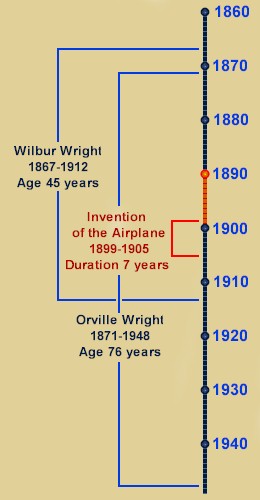
Here is chronology that shows not just the story of the Wright
brothers, but also the world they lived in and the important political,
cultural, and scientific events that loomed large in their lives. Click on the
decade you want to see:
|
 |
Time
|
The Wright
Story
|
The Bigger
Picture
|
|
1890 |
Wilbur and Orville attempt to turn their weekly newspaper
into a daily called The Evening Item. It fails after
a few months and they return to printing.
|
 |
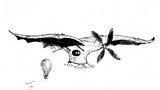
Clement Ader of France makes a brief hop in a
steam-powered, bat-wing airplane called the Eole.
|
 |
|
1891 |
|
|
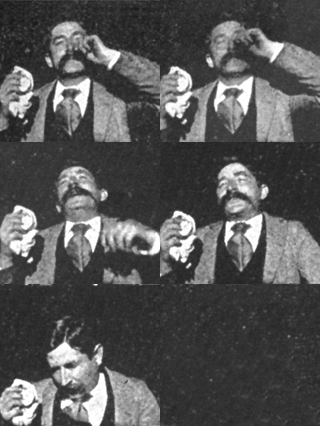
W. L. Judson patents the
zipper, but it does not become popular for another twenty
years. Thomas Edison patents the Kinetoscope, a device to
view motion pictures. This marks the beginning of the motion
picture industry.
|
 |
|
1892 |
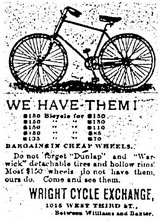
Wilbur Wright
begins to sell and repair bicycles, perhaps inspired by a
huge gathering of the American Wheelmen that takes place in
Dayton on July 4 and 5. Later, Orville joins him. They keep
the printing business, letting childhood friend Ed Sines run
it. |
 |
Tchaikovsky performs
The Nutcracker ballet and Sir Arthur Conan-Doyle publishes The
Adventures of Sherlock Holmes. James Naismith publishes
the rules for basketball and the first official game is
played in Springfield, Massachusetts. Biologist Dimitri
Ivanovski discovers viruses.
|
 |
|
1893 |
The Wright
brothers visit the World's Colombian Exposition, aka
the Chicago World's Fair. The fair hosts the
International Conference on Aerial Navigation, a
watershed event for aviation, but it's doubtful the Wrights
attended.
|
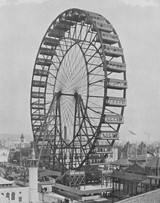 |
Twenty-six
million people visit the World's Colombian
Exposition in Chicago,
marveling at the progress and promise of technology.
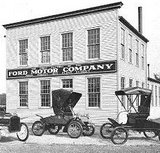
The fair also introduces Americans to hamburgers and the
Ferris Wheel. Henry Ford experiments with gasoline engines
and begins to build an automobile.
|
 |
|
1894 |
|
|
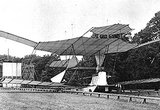
In England, Hiram Maxim builds
a massive multi-wing "test rig" to test lifting surfaces. On a
test run, it breaks free of its restraining track and flies
for about 200 feet.
|
 |
|
1895 |
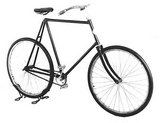
The Wrights
gear up to manufacture
their own bicycles, the "St. Clair" and the "Van Cleve." The
bike business is profitable.
|
 |
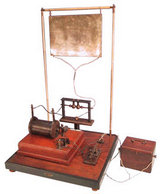
Guglielmo Marconi transmits the
first radio signals from an English post office. Wilhelm
Röntgen discovers X-rays and Rudolf Diesel patents the
diesel engine.
|
 |
|
1896 |
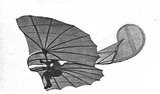
The Wrights take an
interest in the "flying problem" after hearing of the flight of Samuel
Langley's unmanned "Aerodrome" and the death of glider
pilot Otto Lilienthal.
|
 |
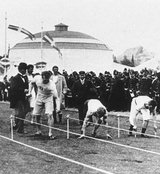
The first modern Olympics are
held in Athens, Greece. John Phillips Sousa composes The
Stars and Stripes Forever and the United States Supreme
Court introduces the "separate but equal" doctrine,
upholding segregation.
|
 |
|
1897 |
|
|
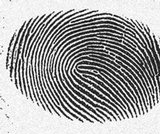
Fingerprints are used to
solve crimes, the Klondike Gold Rush begins in Alaska, and
Bram Stoker writes Dracula.
|
 |
|
1898 |
|
|
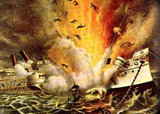
The United States goes to war with Spain, and Marie and
Pierre Curie discover the first radioactive element, radium. Langley
agrees to build a manned Aerodrome for the US Department of
War for $50,000.
|
 |
|
1899 |
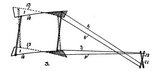
Wilbur devises an aerodynamic control system for aircraft and builds a kite to test
the concept.
|
 |
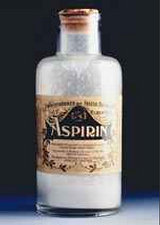
The Bayer pharmaceutical company of Germany
introduces aspirin. Spanish rule ends in Cuba, Ragtime music
becomes popular, and the US Congress approves the use of
voting machines for federal elections. |
 |
|
|
|
|


